

Fragrance-Free Skincare What Exactly Does It Mean
 Admin
- 02/10/2026
"Fragrance-free" appears on a lot of moisturisers, cleansers and sunscreens. Many shoppers assume it means the product has no scent and will never bother their skin.
In everyday use, the phrase means the maker did not add fragrance to give the product a smell. It does not guarantee a scentless product. This blog explains what the label covers, what it leaves out, and how to read a product more carefully.
Contents:
1. What "fragrance-free" means
2. Fragrance-free vs unscented
3. Fragrance vs a product's natural smell
4. Can fragrance irritate skin?
5. Who might prefer fragrance-free products?
6. Fragrance-free vs hypoallergenic
7. How to check a label
8. Essential oils
9. Is fragrance-free better for everyone?
10. Fragrance-free care for Hajj and Umrah
11. A simple fragrance-free routine
12. Common myths
13. FAQs
1. What "fragrance-free" means
A fragrance-free product is made without fragrance ingredients added to create or change its scent. Fragrance itself can come from natural or synthetic sources, and brands use it to make a product smell pleasant or to soften the odour of other ingredients.
Even so, the finished product may still smell like something. Plant extracts, oils, butters and other raw materials carry their own odours. A fragrance-free cleanser can smell herbal, earthy or slightly soapy without any perfume in it.

2. Fragrance-free vs unscented
The two terms are often swapped, but they describe different things.
Fragrance-free: no fragrance was added to the formula.
Unscented: the product is meant to have no noticeable smell. A manufacturer may get there by using a small amount of fragrance material to mask other ingredients' odours.
The FDA acknowledges that some products marketed as unscented can contain fragrance ingredients for exactly this reason. The two labels are not legally defined, so a brand can use them loosely. If you are avoiding fragrance, a neutral smell tells you very little. The ingredient list tells you more.
3. Fragrance vs a product's natural smell
A product can smell without any fragrance being added. Shea butter, oats, clays and plant oils all have their own aromas.
The reverse also matters. "Natural" does not mean "fragrance-free." If a plant-derived ingredient is in the formula mainly to provide scent, it is doing a fragrance's job, whatever its origin. Natural fragrance is still fragrance.
Likewise, "synthetic" does not mean "harmful." What matters is the role an ingredient plays in the formula and whether it suits the person using it.
4. Can fragrance irritate skin?
Yes, for some people. Fragrance is one of the best-known causes of allergic contact dermatitis from cosmetics, which shows up as an itchy, red rash where the product touched the skin. The FDA includes fragrances among the main classes of cosmetic allergens, alongside natural rubber, preservatives, dyes and metals.
That doesn't make every scented product a problem for every person. Plenty of people use fragranced skincare with no trouble, and irritation has many possible causes. The fair summary is that fragrance is a recognised trigger for some people, not a universal hazard.
5. Who might prefer fragrance-free products?
It is worth considering if you:
- Have reacted to fragranced products before
- Have been told you have a fragrance allergy
- Notice redness, itching or stinging after using certain cosmetics
- Want a shorter, simpler routine
- Would like to cut down the number of possible allergens you apply
If reactions keep happening, don't assume fragrance is the culprit. A dermatologist can help narrow it down, and patch testing is a standard way to check for specific contact allergens.
6. Fragrance-free vs hypoallergenic
They are not the same thing. A fragrance-free product can still contain preservatives, plant extracts or other ingredients that bother a particular person. "Hypoallergenic" is no guarantee either, since the FDA notes that no federal standard governs its use.
The FDA's advice is to read the ingredient panel and avoid ingredients you know or suspect you react to, rather than relying on a front-of-pack phrase.
7. How to check a label
- Look for the "fragrance-free" claim, then confirm it against the ingredient list.
- Watch for "Fragrance," "Parfum" or "Perfume." In the U.S., fragrance blends can be listed under one of these words without naming each component, because formulas are treated as trade secrets.
- Remember that the EU requires many individual fragrance allergens to be listed by name once they pass a set concentration. That list is being expanded to roughly 80 substances, with the new rules phasing in from July 2026.
- Re-read the list whenever you switch products. Formulas change, and similar-looking items from one brand can differ.
- If you still can't tell, contact the manufacturer.
8. Essential oils
Essential oils are plant-derived, but that doesn't make them fragrance-neutral. They are concentrated aromatic materials, and their scent compounds can include recognised allergens. Linalool, limonene, citral, citronellol and geraniol all appear on the EU's fragrance-allergen list that the FDA reproduces.
The FDA also notes that "essential oil" has no regulatory definition. If your goal is to avoid added scent, a product scented with essential oils doesn't meet it.

9. Is fragrance-free better for everyone?
No. For many people, scent is a matter of taste, and enjoying a fragranced product is perfectly reasonable. For someone with a known sensitivity, skipping fragrance can be a sensible way to reduce exposure to a trigger.
Which routine suits you depends on your skin type, concerns, known allergies and personal preferences. A fragrance-free label is one useful clue, not a verdict.

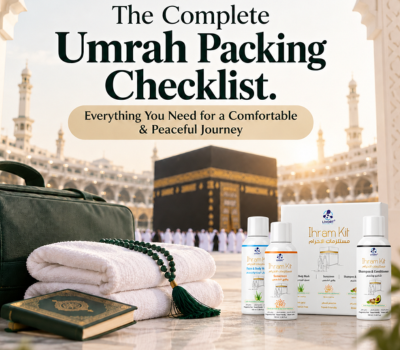
10. Fragrance-free care for Hajj and Umrah
Fragrance-free products have a practical use for pilgrims. While in Ihram, pilgrims observe restrictions that include avoiding perfume.
People packing for Umrah often look for fragrance-free face wash, body wash, shampoo, conditioner and sunscreen. Having them clearly labelled makes shopping and packing easier.
The LIVORT Ihram Kit. LIVORT sells a kit aimed at pilgrims, containing three 100 ml bottles:
1.Face & Body Wash
2.Sunscreen (SPF 50 PA++++)
3.Shampoo & Conditioner
The brand markets the kit as fragrance-free and travel-friendly. As with any product used in Ihram, check the ingredient list yourself and follow the guidance of the scholar you rely on.

11. A simple fragrance-free routine
You don't need to replace everything at once. Start with what you use most.
Morning: a gentle cleanser, a moisturiser free of ingredients you react to, and a broad-spectrum sunscreen applied and reapplied as directed.
Evening: a cleanser to remove sunscreen and the day's build-up, a treatment product only if you have a specific concern, then a moisturiser.
If your skin is reactive, add new products one at a time. If you change several things together and a reaction appears, you can't tell which product caused it.

12. Common myths
- "Fragrance-free means no smell." Not necessarily. Other ingredients can have their own odour.
- "Unscented means fragrance-free." Not always. Some unscented products use masking fragrance.
- "All fragrance is bad for skin." Too broad. It's a trigger for some people, not everyone.
- "Natural fragrance can't cause allergies." It can. Some naturally occurring scent compounds are known allergens.
- "Fragrance-free means hypoallergenic." No. Other ingredients can still cause reactions

Final thoughts
Fragrance-free generally means no fragrance was added on purpose. Look past the marketing, read the ingredient list, and choose what fits your skin. (Recommended: Livort Ihram Kit)
LIVORT Ihram Kit is 100% fragrance-free and safe for use in Ihram, and that it has been verified and certified by Dar-ul-Ifta for authenticity.
13. FAQs
1. What does fragrance-free mean in skin care
Ans. No fragrance has been deliberately added.
2. Is it better for sensitive skin?
Ans. It can help people who react to fragrance, but it doesn't guarantee a product won't irritate.
3. Is it the same as unscented?
Ans. Unscented products not always but can contain masking fragrance.
4. Are essential oils fragrance?
Ans. When they are included for scent, yes, so a product scented that way shouldn't be assumed fragrance-free.
5. Can fragrance cause irritation?
Ans. Yes, including allergic contact dermatitis in susceptible people.
6. Is fragrance-free skincare scentless?
Ans. Not always. Some ingredients can have their own natural smell.
7. Why LIVORT Hajj Umrah Kit (Ihram Kit) is useful for Umrah and Hajj?
Ans. The LIVORT Ihram Kit is useful for Umrah and Hajj because it brings together three fragrance-free personal-care essentials in one travel-friendly set: face and body wash, SPF 50 PA++++ sunscreen, and shampoo and conditioner. The products come in 100 ml bottles each, making them easy to pack and keep together.
The fragrance-free formulas are designed for pilgrims who want personal-care products suited to use during Ihram. The sunscreen can also be useful during time outdoors in the sun.
8. Is the LIVORT Ihram Kit fragrance-free?
Ans. Yes, LIVORT markets it that way. It contains a Face & Body Wash, an SPF 50 PA++++ Sunscreen, and a Shampoo & Conditioner, each in a 100 ml bottle.
All Posts
Discover insights, ideas, and inspiration from the Livort community. Explore our latest posts on modern living, smart home solutions, décor trends, and practical tips to elevate your everyday lifestyle.

Comment